Studio FacileMade Visual
Vet tech study guide · VTNE topics · US edition

Vet Tech Made Visual

Restraint, lab work, anesthesia and dentistry, explained with pictures.

78 illustrated pages, one topic per page, built on the ten domains of the VTNE. Plus two free bonuses: a 150-question practice test with every answer explained, and a dosage calculations workbook.
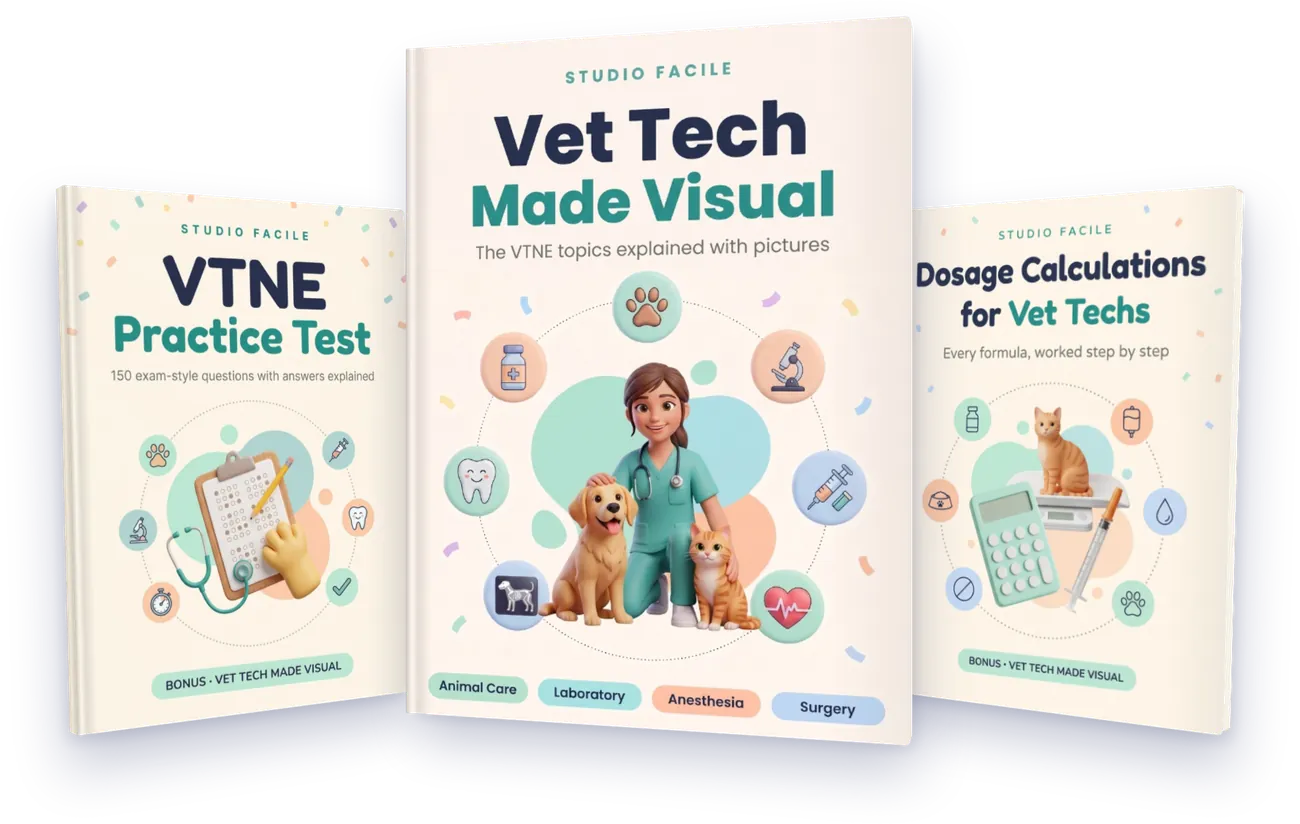
The three books: Vet Tech Made Visual, VTNE Practice Test and Dosage Calculations for Vet Techs
  • One topic per pageThe drawing carries the idea, the boxes give the facts.
  • Built on the ten VTNE domainsFrom animal care to communication, in the weight the exam gives them.
  • Three PDFs by emailRead them on your phone, print what you need.
Get the 3 books — $27
Secure checkout Instant download 30-day refund policy
78illustrated pages,
one topic each
150practice questions,
answers explained
15dosage calculations,
every step shown
Look inside

This Is What a Page Actually Looks Like

Real pages from the three books. Tap any page to see it full size.

How the book works

Seven Parts, Ten Domains

The book follows the ten domains of the VTNE content outline and gives each one the pages it needs.

1

Care and the lab

Physical exam, restraint, nursing, then samples, smears, urinalysis and parasites.

Parts I and II
2

Drugs and anesthesia

Drug classes, labels and laws, the anesthetic plan, monitoring and pain.

Parts III and IV
3

Surgery, teeth and the ER

Asepsis and instruments, dentistry and imaging, triage, shock and CPR.

Parts V to VII
How each page worksOne topic per page. The drawing carries the idea, the boxes give the facts, and the dark strip at the bottom holds the point most often missed. Where sources and clinics differ, the page says which source it follows.
The difference

A Wall of Notes vs. A Page You Understand

Lecture notes and long chapters

  • Normal values in a list, with no picture of the patient
  • Instruments and cells you are supposed to recognize from words
  • Dose math you redo from scratch every time
  • No clear idea of how much of the exam each topic is worth

Vet Tech Made Visual

  • The restraint, the cells, the instruments and the teeth, drawn
  • One topic per page, from the physical exam to CPR
  • A one-page dose method, and a full workbook as a bonus
  • Built on the ten VTNE domains, with their weight on the exam
The kit

One Book to Learn It. Two to Lock It In.

The book teaches. The practice test shows you what to review. The workbook makes the dose math automatic. The two bonuses are free.

The bookVet Tech Made Visual78 pages · 7 parts

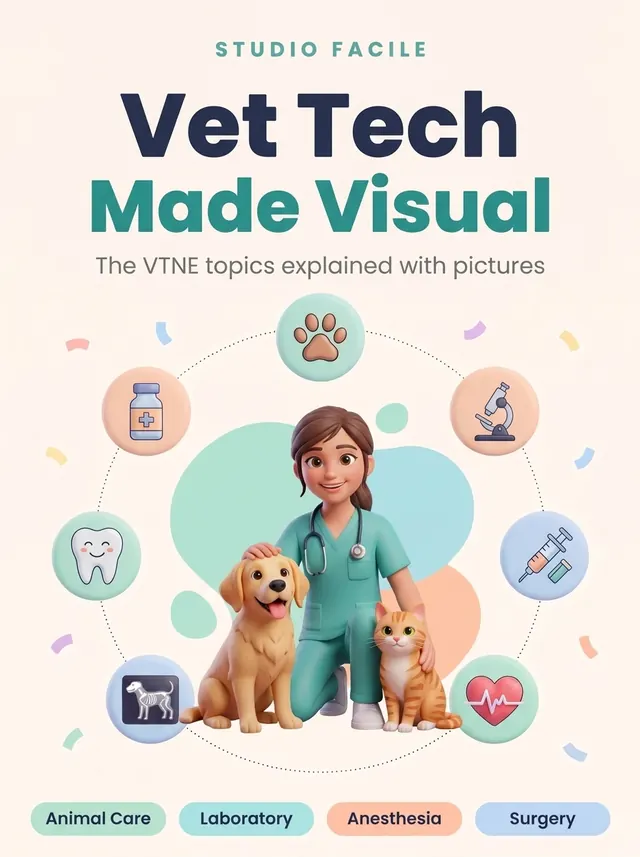
Vet Tech Made Visual

Animal care and nursing, laboratory procedures, pharmacy and pharmacology, anesthesia and pain, surgical nursing, dentistry and imaging, and emergency care. Two final review pages at the end.

Bonus 1 · FreeVTNE Practice Test24 pages · 150 questions

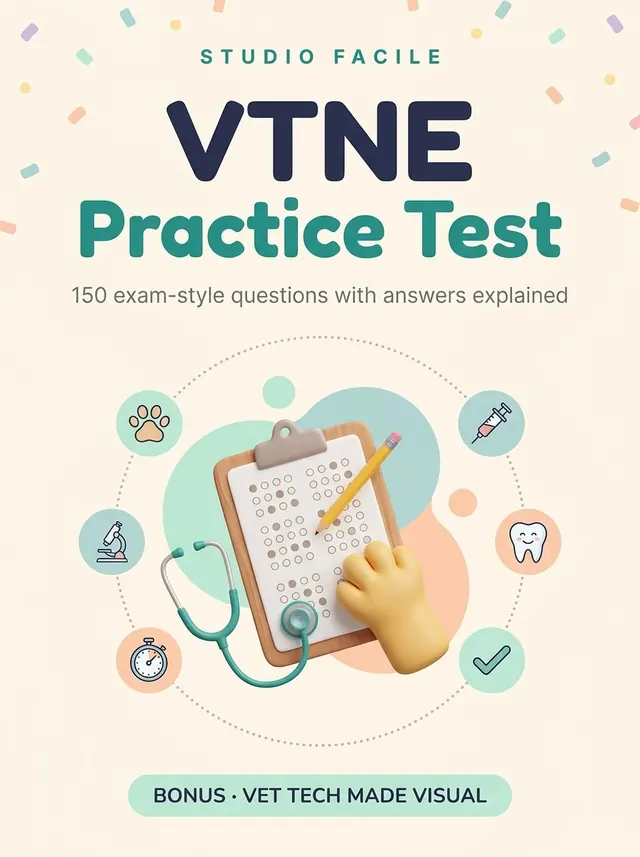
VTNE Practice Test

150 exam-style questions in five blocks of 30, with the same weight for each VTNE domain as the real exam. An answer sheet to print and an answer key with one line on why, plus what to review if you missed it.

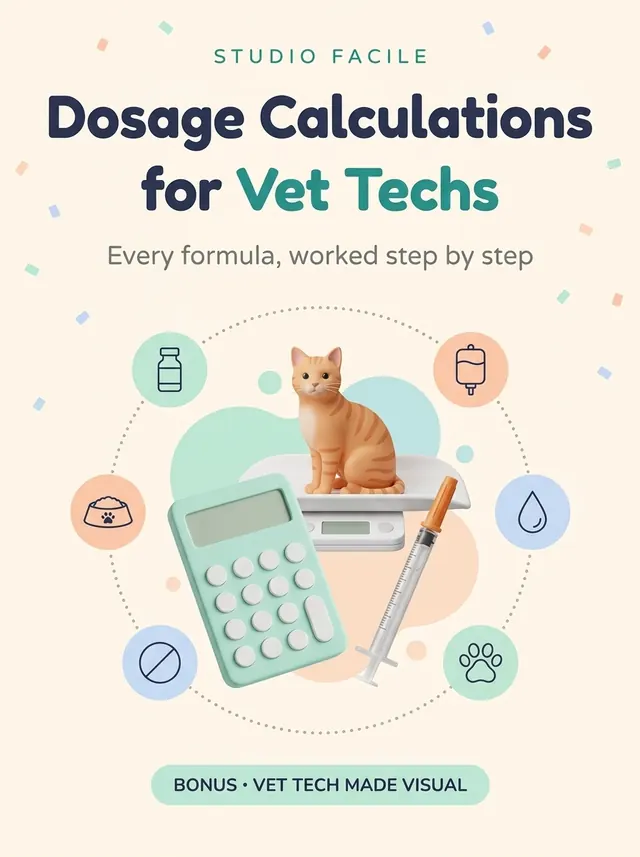
Bonus 2 · FreeDosage Calculations for Vet Techs22 pages · 15 calculations

Dosage Calculations for Vet Techs

Pounds and kilograms, mg/kg to mL, tablets, percent solutions, dilutions, CRIs, maintenance and deficit fluids, drip rates, insulin, transfusions and energy needs. A worked example and three exercises each, every solution step by step, and a formula sheet.

Get the kit — $27
What is inside the book

Seven Parts, From the Exam Room to the ER

The real table of contents. Tap a part to see its pages.

IPart I · pp. 4–18Animal Care and NursingThe exam, safe handling and everyday nursing
  1. The physical exam, nose to tail
  2. Normal vital signs
  3. Restraining a dog safely
  4. Handling cats with less stress
  5. Reading fear and stress
  6. Body condition score
  7. Hydration, gums and CRT
  8. Feeding: energy needs
  9. Placing an IV catheter
  10. Bandages: the three layers
  11. Vaccines: core and noncore
  12. Zoonoses and isolation
  13. Large animals and exotics
  14. Clients, records and euthanasia
IIPart II · pp. 19–30Laboratory ProceduresFrom the sample to the microscope
  1. Blood samples: sites and tubes
  2. PCV and total protein
  3. Making a blood smear
  4. The white blood cells
  5. Red cells and platelets
  6. Urinalysis: collection and USG
  7. Urine sediment
  8. Fecal exams
  9. Common parasites and heartworm
  10. Skin and ear tests
  11. The microscope
IIIPart III · pp. 31–39Pharmacy and PharmacologyDrug classes, labels, laws and safe handling
  1. The prescription and the label
  2. Controlled substances
  3. Routes and dosage forms
  4. Dose calculation: the method
  5. Antimicrobials
  6. Antiparasitics and the MDR1 gene
  7. NSAIDs and corticosteroids
  8. Storing and handling drugs safely
IVPart IV · pp. 40–50Anesthesia and Pain ManagementFrom the pre-anesthetic exam to a comfortable recovery
  1. The anesthetic plan and ASA status
  2. Premedication and induction drugs
  3. Endotracheal intubation
  4. The anesthesia machine
  5. Stages and depth of anesthesia
  6. Monitoring under anesthesia
  7. Recovery and extubation
  8. Recognizing pain
  9. Pain scales
  10. Multimodal analgesia
VPart V · pp. 51–59Surgical NursingAsepsis, instruments and the surgical patient
  1. The sterile field
  2. Instruments (1): cutting and grasping
  3. Instruments (2): clamps, needle holders, retractors
  4. Cleaning and sterilizing
  5. Preparing the patient
  6. Scrubbing, gowning and gloving
  7. Suture materials and needles
  8. After surgery
VIPart VI · pp. 60–68Dentistry and Diagnostic ImagingTeeth, radiographs and ultrasound
  1. Teeth and the Triadan system
  2. Periodontal disease
  3. The dental cleaning (COHAT)
  4. Dental radiographs and home care
  5. Radiation safety
  6. How a radiograph is made
  7. Positioning and views
  8. Ultrasound and contrast studies
VIIPart VII · pp. 69–78Emergency and Critical CareTriage, shock, CPR and the most common emergencies
  1. Triage: the first look
  2. Shock and fluid therapy
  3. CPR: the RECOVER approach
  4. Blood types and transfusions
  5. Bloat and the blocked cat
  6. Common toxins
  7. Bleeding, fractures and oxygen
  8. Final review (1): numbers to know
  9. Final review (2): facts that come back
For the VTNE

It Covers the Ten Domains of the VTNE

The book is built on the VTNE content outline, and the practice test gives each domain the same weight as the real exam, in five blocks of 30:

VTNE10 domains150 questions
1
Animal Care and NursingQuestions 1–30
2
Pharmacy · Pain ManagementQuestions 31–60
3
Anesthesia · DentistryQuestions 61–90
4
Surgical Nursing · Emergency CareQuestions 91–120
5
Laboratory · Imaging · CommunicationQuestions 121–150

The VTNE is a program of the AAVSB. Studio Facile is not affiliated with or endorsed by the AAVSB, which owns the VTNE. The 150 questions were written for this book: they are not official VTNE questions. The real exam sets its own scoring and passing standard, so check the AAVSB candidate handbook.

How you use it

Read It, Keep It Close, Test Yourself

1

Read one part at a time

Seven parts that follow the exam domains: care, the lab, pharmacy, anesthesia, surgery, teeth and imaging, and the ER.

2

Practice the math

Fifteen calculations, each with a worked example and three exercises, until the units cancel on their own.

3

Take the test one block a day

30 questions per block. Aim for at least 24 of 30; the key sends every wrong answer back to its pages in the book.

Is this for you

Who This Was Drawn For

You are in a vet tech program

Lectures, labs and clinical rotations. Each topic on one illustrated page you can come back to.

Your VTNE is coming up

150 practice questions with the weight of each domain, and two final review pages of numbers and facts.

You work in a clinic

Assistants and techs who want restraint, lab work, anesthesia monitoring and dose math clear, one page each.

The offer

Everything You Get, For One Payment

Vet Tech Made Visual · the kit

The three books
  • ✓The book: 78 illustrated pages, seven parts
  • ✓Bonus 1: VTNE Practice Test, 150 questions Free
  • ✓Bonus 2: Dosage Calculations for Vet Techs Free
  • ✓Answer sheet to print, every answer explained Included
  • ✓Print it as often as you want Included
One payment$27No subscription
Get the kit — $27
Secure checkout Instant download 30-day refund policy
The PDFs are emailed to you right after checkout.

30
days

If something is wrong with it, you get your money back

For 30 days. If a file does not open, if what you received is not what this page describes, if you were charged twice or the download never arrived, write to us and we refund you in full.

One email to info@studiofacilebook.com is enough.

Questions

Before You Decide

Is this official VTNE material?

No. It is an independent illustrated study guide built on the VTNE content outline. The VTNE is a program of the AAVSB, and Studio Facile is not affiliated with or endorsed by the AAVSB. The 150 practice questions were written for this book; they are not official exam questions.

Does it replace my vet tech program?

No. It is not a course, it does not give credit or clinical hours, and it does not replace your program’s textbooks. It is the illustrated material that goes with them.

Does it tell me what dose to give?

No. The book covers drug classes and how they are used, and the workbook teaches the calculation with example numbers. The dose is always set by the veterinarian and the product label, and your clinic’s protocols come first.

How do I get it?

By email, straight after you buy. Three PDFs you can read on your phone, tablet or computer.

Can I print it?

Yes, as many times as you want, for yourself. The practice test has an answer sheet to print and fill in.

How many pages is it?

The book has 78 pages, the Practice Test 24 and the Dosage Calculations workbook 22.

Is it a subscription?

No. One payment of $27, and the three PDFs are yours.

One Last Thing

Vet tech work is hands-on, and most of it is easier to remember once you have seen it: the hold, the cell, the instrument, the tooth.

See it.
Understand it.
Do it right.

Get the 3 books — $27
All three PDFs by email